
How we failed Ukraine
A four year late reckoning

Hello and welcome! My name is Davide, and I’m an Italian journalist who has been living and working in Kyiv for almost three years. For those of you visiting for the first time, here’s a bit more about who I am and what this space is. My last newsletter was an essay on the war on civilian energy grid that many nations have waged against their enemy, not just in Ukraine. I hope you’ll find the following text engaging.
I saw my first piece of Western-made equipment in Ukraine in November 2023. At first, we thought a drone had dropped a grenade on the road. We were driving between Orikhiv and Mala Tokmachka, less than 15 kilometres from Russian positions, when a shockwave jolted the car and we passed through a cloud of thick smoke. The driver frantically tried to U-turn amid panicked shouts. Only our fixer, Vadym, stayed calm. «It was an outgoing», he said.
Then, we noticed the shape of the massive self-propelled gun which had just sent a shot toward the Russian lines, hidden among the trees lining the road. We stopped the car and briefly debated about the possibility of approaching the crew, but the prospect of the gun firing again while we were perched on top of it, knocking on a sealed hatch, was less than appealing. We decided to move on.
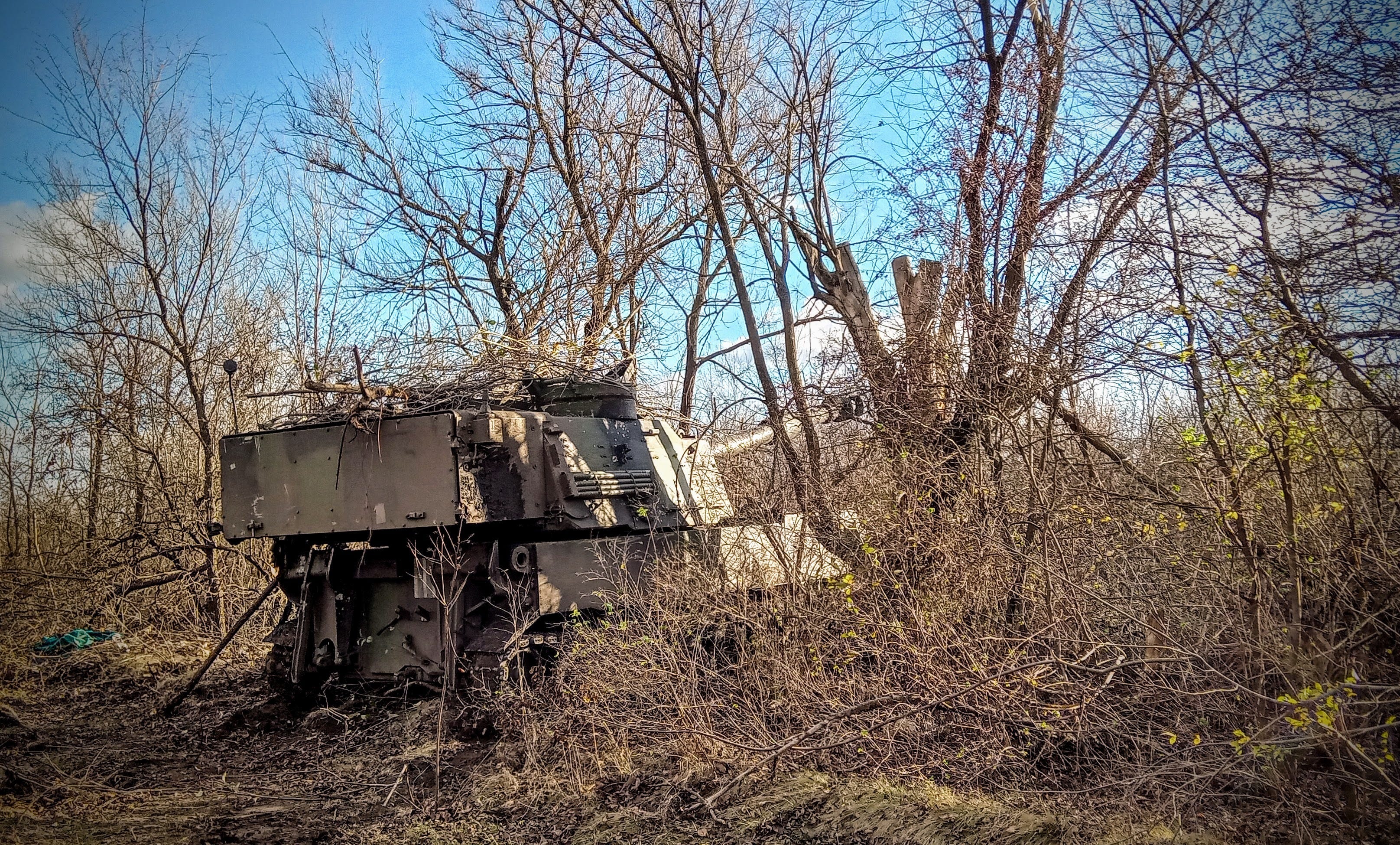
Our brief encounter was with an American-made M109, a tank with an artillery gun designed to shoot over the horizon, one of the roughly 300 similar guns that Ukraine received from its allies. Altogether, the Americans and the Europeans sent more than 1,500 armored vehicles of various types, one hundred modern jet fighters, thousands of missiles both for defense and offense, and millions of rounds of ammunition in every caliber currently in production. The Europeans, by far the largest financial contributors to Ukraine’s defence, delivered, or have commited to deliver, more than 300 billion euros - in EU budgetary terms, this is no trifling sum: it is enough to wipe out Greece’s national debt.
Yet, despite all this military bounty, my encounter with the American gun was the exception rather than the rule. Along the frontline, Soviet-era tanks, Ukrainian-made armored vehicles and Chinese-imported drones, still dominate the battlefiled and, at the same time, are being outnumbered by Russian forces, who deploy more tanks, more planes and more artillery munitions. Meanwhile, far from the trenches, Russian drones and balistic missile, regularly penetrate the shield of NATO-made anti-air defence.
It’s plain to see that despite their collective industrial and financial might, the United States, the European Union, and their allies have failed to turn the battle in Kyiv’s favor. There is no shortage of commentators arguing that this is Ukraine’s fault - whether due to the mistake of its generals or the lack of its soldiers; or that it is Russia’s merit - thanks to its massive military-industrial base. But those explanations are just one part of the story. Generals blundered on both sides and Ukraine’s manpower problems are fairly recent. It’s true that measured in purchasing power parity, Russia’s economy is the fourth largest in the world, yet it’s still no match for the combined strength of USA and EU.
The real issue with all attempts to explain Ukraine’s predicament despite the help it received is that there’s a lack of a true counterfactual. Ukraine has received, per year, barely a fraction of one percent of its backers’ GDP - little more than a rounding error in national accounts. In fact, Ukraine stands out as one of the countries that received the smallest amount from its Western allies in the whole of the last century, while simultaneously fighting one of its largest wars. Measured against GDP, the war in Ukraine cost its allies an order of magnitude less than Korea, Vietnam, or the Gulf War. Even the United States’ counterinsurgency operations in Afghanistan, and the support it poured into the Afghan government, outspent the defense of Kyiv.
Behind the glitz of shiny new weapons packages, monthly delivery announcements, and proclamations of unwavering support, even this meagre amount had to be fought for. Every new weapon system, kit, or tranche of financial aid became the subject of endless negotiations. Money and equipment had to be hunted down in every nook of dusty army depots and every cranny of public budgets.
The fact that the European Union paid as much to Russia for oil as it has sent to Ukraine speaks less about the ties it maintains with Moscow than to the derisory amount of money Ukraine actually received - the equivalent of what a couple of middle size countries spend each year on a fraction of their energy needs. One gets a different sense of President Zelensky’s pleas for weapons when considering the gap between the bombastic proclamations and the resources Ukraine has actually received.
It’s even more jarring that this lackluster effort was accompanied by an increasingly uncompromising rhetoric by political leaders. Ukraine’s defense has been defined both a moral duty and a strategic interest by its allies, who at key moments, promised help that, whether they knew it or not, they were not ready to give.
Four years ago, when missiles began to fly and tanks rolled in, at least one crime and many mistakes had already been committed. Vladimir Putin decided on a full military invasion to reassert, once and for all, what he saw as his waning influence over Ukraine. Even before that, the United States and Europe had failed to prevent the invasion and foster a de-escalation that might have made all talk of arming Ukraine superfluous.
The Kremlin’s brazen plan came close to success but was ultimately defeated by the resistance of a surprisingly determined Ukrainian leadership, backed by the vast majority of the population. After surviving the initial shock, the Ukrainians had to choose between submiting to the harsh conditions Putin demanded in order to stop a renewed aggression, or keep resisting.
At that critical juncture, the allies promised Ukraine help until victory, and it’s not really important which Western leader said exactly what in which trip. Solemn promised were made, and the Ukrainians were persuaded that they could achieve better conditions on the field of battle.
The greatest fault of the “Western leaders” was allowing the war to begin in the first place, and, once the guns started to speak, failing to de-escalate it. But after they decided that the conflict should have had a military solution, they spectacularly failed to put their money where their mouths were. Their flagrant hypocrisy made the Ukrainians more bitter year after year, while their increasing belligerent rhetoric, to justify their paltry expenditure of resources, often scared and confused their own popolutation, making Kyiv’s popular support even more precarious.
Now we have reached the point where that bitterness and fear, compounded by exhaustion and internal strife, have evolved into a crisis that risks leaving Ukraine without enough soldiers to man the weapons that the allies could still scrape together. It now finds herself unable either to win or to capitulate to conditions that, after four years, have only grown more demanding. A position imposed by Vladimir Putin’s criminal aggression - and, more tragically perhaps, by the failures of her best friends.
Thank you very much for reading. All of this has been screamed at the top of their lungs by many Ukrainians for a long time. As part of the so-called “West” — an expression I detest but which now seems unavoidable — I felt compelled to put down where our responsibilities lie. If you enjoyed this content, please consider liking, commenting, or subscribing. You can also follow me on X, where I frequently write in English. Once again, thank you!
grazie